Ai Messages & Calls
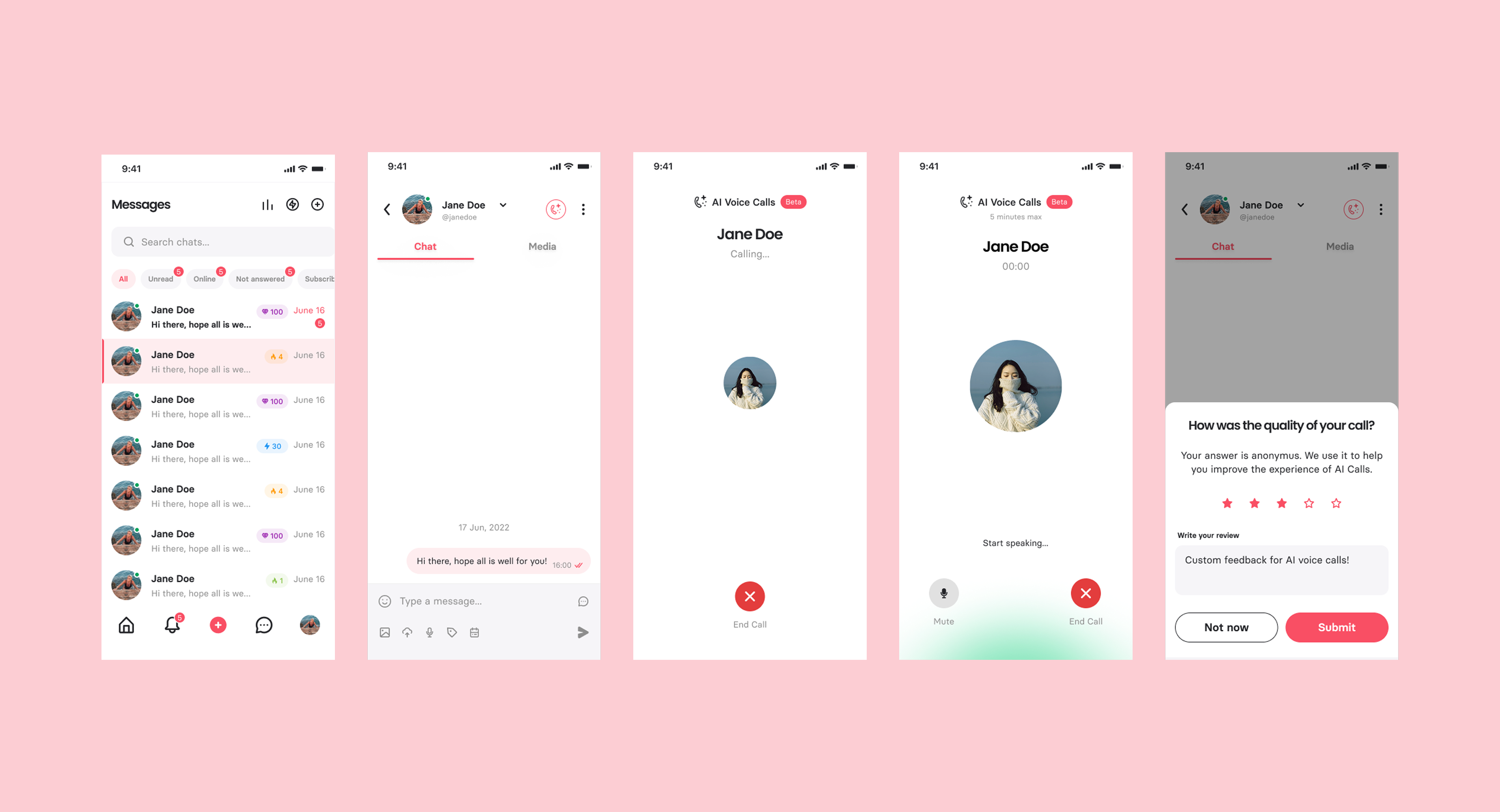
Experience AI-powered voice calls on Fanvue.com. Offering creators a dynamic way to engage with fans in real-time.
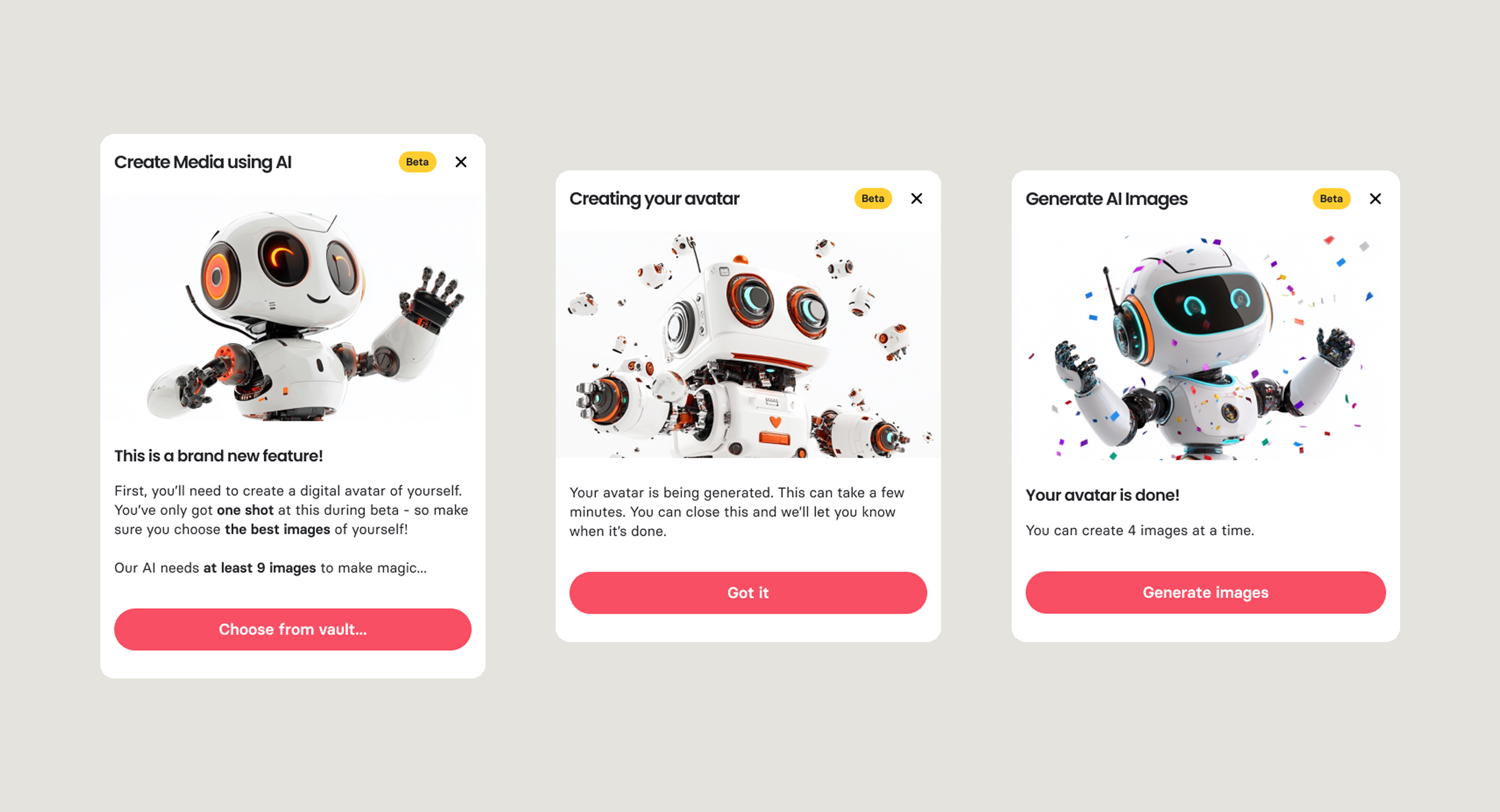
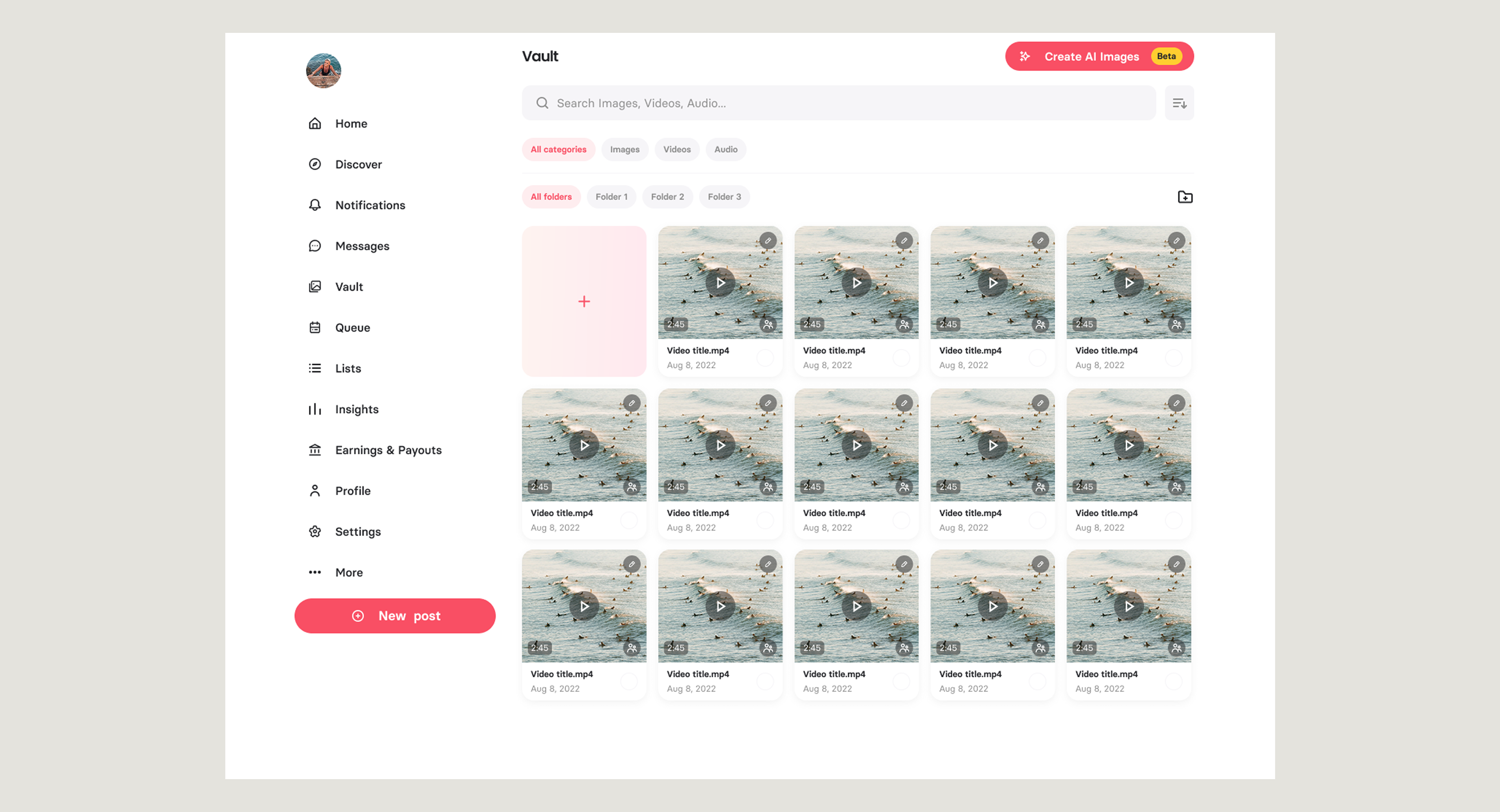
Ai Messages & Calls part of our ongoing effort to enhance the experience for both creators and their fans on Fanvue, I designed and oversaw the implementation of AI-powered calls and messaging features. These features are crafted to provide seamless, intelligent communication between creators and their audiences, helping creators engage at scale without compromising the personal touch.

Client
Fanvue
Role
Senior UX/ UI Designer
Team
3 Designers, 3 Web Developers, 1 Ai Enginner, and 2 PMs
Timeframe
Aug 2024 - Oct 2025

Sam
Frontend Developer at Fanvue

“Alex has been consistently responsive and helpful. He has been happy to work collaboratively every step of the way, giving and taking feedback productively, leading to a great end product.”
The Problem
As creators scale their audiences, direct one-to-one interaction becomes increasingly difficult to maintain. High volumes of messages and fan requests make it unrealistic for creators to respond personally to everyone, risking slower response times, reduced engagement, and creator burnout.
At the same time, fans expect personal, authentic interactions. Generic or automated responses can damage trust and weaken the creator–fan relationship. The challenge was to design a solution that could scale communication without losing the sense of intimacy that fans value.
Maintaining authenticity at scale
A key challenge was ensuring AI-generated messages genuinely felt like they came from the creator. The responses needed to reflect individual tone, personality, and communication style, rather than sounding generic or robotic. Achieving this required careful training using real creator interactions and ongoing refinement.
Creating natural-sounding AI calls
For AI calls, the biggest hurdle was making stitched voice recordings feel fluid and conversational. Any awkward transitions or unnatural pacing would immediately break immersion. Extensive testing was needed to fine-tune timing, phrasing, and delivery so calls felt personal and believable.
Balancing automation with creator control
Another challenge was deciding how much control creators should have over AI-generated content. The system needed to save time without removing oversight. Striking the right balance meant building review, approval, and customisation options that felt empowering rather than burdensome.
Trust and perception
Introducing AI into personal communication carries an inherent trust risk. Fans needed to feel comfortable and positive about AI-assisted interactions, and creators needed confidence that their voice and reputation were being represented accurately.
The Project Goals
The goal of this project was to create a scalable communication experience that allowed creators to maintain meaningful relationships with their audiences as they grew. Rather than replacing personal interaction, the objective was to use AI to extend it, giving creators the ability to engage with more fans while preserving the authenticity and personality that defines their brand.
A key focus throughout the design process was ensuring that every interaction felt genuine. AI-generated messages and voice calls needed to reflect each creator's unique tone, style, and manner of speaking, allowing fans to feel as though they were still communicating directly with the creator. Alongside this, the experience needed to build trust by giving creators transparency and control over how AI represented them, while reassuring fans that interactions remained thoughtful, personalised, and true to the creator's identity.
The Process
Every project starts with understanding the problem before designing a solution. I use the Double Diamond design process as a guide because it keeps the work focused on real user needs while ensuring the final product meets business goals.
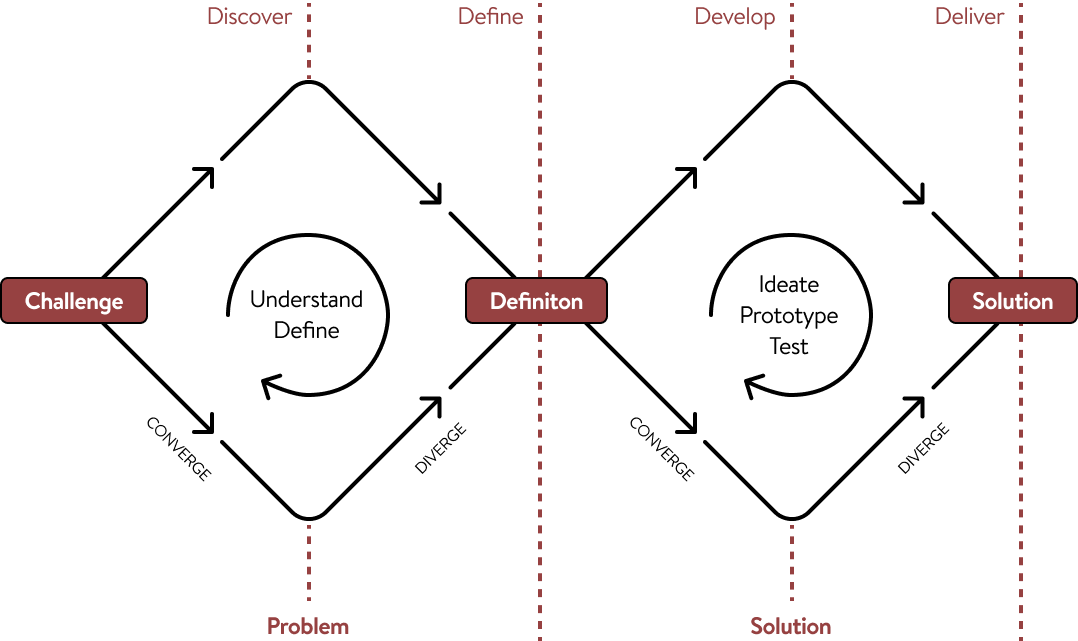
Discover (Understanding the Problem)
Before opening Figma, I take time to learn about the business, the users, and the challenges they're facing.
This might include:
- Learning about your business goals
- Understanding your target audience
- Reviewing existing products or websites
- Looking at competitors and industry trends
- Identifying pain points and opportunities
The goal is to build a clear picture of what needs to be solved—not just what needs to be designed.
Define (Creating a Clear Direction)
Once the research is complete, I organise the findings into a clear plan.
During this stage, I:
- Prioritise the biggest user and business needs
- Define project goals
- Map out user journeys
- Decide which features or pages will have the greatest impact
This creates a strong foundation before moving into design, helping avoid unnecessary revisions later.
Develop (Exploring Solutions)
With a clear direction in place, I begin designing and testing ideas.
This typically includes:
- Wireframes
- User flows
- Interface design
- Interactive prototypes
- Gathering feedback and refining the design
Rather than settling on the first idea, I explore different approaches to find the solution that works best for both users and the business.
Deliver (Building the Final Product)
The final stage is about turning the chosen solution into something ready to launch. This includes:
- High-fidelity UI designs
- Design systems and components
- Developer handoff
- Final quality checks
- Support during implementation when needed
The result is a polished, user-focused product that is designed to solve real problems, not just look good.
Why This Process Matters
Following a structured design process helps reduce guesswork, keeps projects aligned with business goals, and ensures every design decision has a purpose.
It also creates better communication throughout the project, giving clients visibility into each stage and confidence that we're solving the right problem before investing time in the final design.
Conclusion
The launch of AI-powered messaging and calls significantly improved both engagement and efficiency across the platform. Creators were able to communicate with their audiences at scale while preserving a strong sense of authenticity and personal connection.
Daily fan interactions increased by 35%, alongside a 20% rise in average creator response rates. Creators handled messages 50% more efficiently, reducing manual workload and helping prevent burnout without compromising quality.
Fan feedback was overwhelmingly positive, with 85% reporting higher satisfaction due to the personalised nature of AI interactions. AI-powered calls, in particular, deepened fan relationships, contributing to a 25% increase in recurring subscribers.
Overall, the feature successfully scaled creator–fan communication, strengthened platform loyalty, and demonstrated that AI can enhance personal engagement when designed with care, transparency, and creator control at its core.
35% increase
in daily fan–creator interactions
20% improvement
in creator response rates
48% reduction
in time spent managing messages for active creators
Reflection & Take-Away
This project reinforced that designing AI experiences is about much more than automation. Success depended on understanding the emotional expectations of both creators and fans, ensuring that efficiency never came at the expense of authenticity. The biggest challenge was finding the right balance between intelligent automation and human connection, and every design decision was measured against that principle.
Working closely with product, engineering, and AI teams also highlighted the importance of collaboration when building emerging technologies. From refining conversation flows to improving voice quality and creator controls, the product evolved through continuous testing and iteration rather than a single design solution.
Looking back, one of the most valuable lessons was that trust is a core design requirement for AI products. Giving creators ownership over how their AI behaved and ensuring fans received natural, believable interactions was just as important as the technology itself. The success of the feature demonstrated that when AI is designed with transparency, empathy, and user control at its core, it can strengthen relationships rather than replace them.


Say Hello
I’m open for freelance and permanent role opportunities. Or simply say hello, if you like the site!
LinkedIn
me@alexwaters.co.ukSite designed and built by Alex Waters
©2026
Ai Messages & Calls
Experience AI-powered voice calls on Fanvue.com. Offering creators a dynamic way to engage with fans in real-time.
Ai Messages & Calls part of our ongoing effort to enhance the experience for both creators and their fans on Fanvue, I designed and oversaw the implementation of AI-powered calls and messaging features. These features are crafted to provide seamless, intelligent communication between creators and their audiences, helping creators engage at scale without compromising the personal touch.

Client
Fanvue
Role
Senior UX/ UI Designer
Team
3 Designers, 3 Web Developers, 1 Ai Enginner, and 2 PMs
Timeframe
Aug 2024 - Oct 2025
Sam
Frontend Developer at Fanvue
“Alex has been consistently responsive and helpful. He has been happy to work collaboratively every step of the way, giving and taking feedback productively, leading to a great end product.”
The Problem
As creators scale their audiences, direct one-to-one interaction becomes increasingly difficult to maintain. High volumes of messages and fan requests make it unrealistic for creators to respond personally to everyone, risking slower response times, reduced engagement, and creator burnout.
At the same time, fans expect personal, authentic interactions. Generic or automated responses can damage trust and weaken the creator–fan relationship. The challenge was to design a solution that could scale communication without losing the sense of intimacy that fans value.
Maintaining authenticity at scale
A key challenge was ensuring AI-generated messages genuinely felt like they came from the creator. The responses needed to reflect individual tone, personality, and communication style, rather than sounding generic or robotic. Achieving this required careful training using real creator interactions and ongoing refinement.
Creating natural-sounding AI calls
For AI calls, the biggest hurdle was making stitched voice recordings feel fluid and conversational. Any awkward transitions or unnatural pacing would immediately break immersion. Extensive testing was needed to fine-tune timing, phrasing, and delivery so calls felt personal and believable.
Balancing automation with creator control
Another challenge was deciding how much control creators should have over AI-generated content. The system needed to save time without removing oversight. Striking the right balance meant building review, approval, and customisation options that felt empowering rather than burdensome.
Trust and perception
Introducing AI into personal communication carries an inherent trust risk. Fans needed to feel comfortable and positive about AI-assisted interactions, and creators needed confidence that their voice and reputation were being represented accurately.
The Project Goals
The goal of this project was to create a scalable communication experience that allowed creators to maintain meaningful relationships with their audiences as they grew. Rather than replacing personal interaction, the objective was to use AI to extend it, giving creators the ability to engage with more fans while preserving the authenticity and personality that defines their brand.
A key focus throughout the design process was ensuring that every interaction felt genuine. AI-generated messages and voice calls needed to reflect each creator's unique tone, style, and manner of speaking, allowing fans to feel as though they were still communicating directly with the creator. Alongside this, the experience needed to build trust by giving creators transparency and control over how AI represented them, while reassuring fans that interactions remained thoughtful, personalised, and true to the creator's identity.
The Process
Every project starts with understanding the problem before designing a solution. I use the Double Diamond design process as a guide because it keeps the work focused on real user needs while ensuring the final product meets business goals.
Discover (Understanding the Problem)
Before opening Figma, I take time to learn about the business, the users, and the challenges they're facing.
This might include:
- Learning about your business goals
- Understanding your target audience
- Reviewing existing products or websites
- Looking at competitors and industry trends
- Identifying pain points and opportunities
The goal is to build a clear picture of what needs to be solved—not just what needs to be designed.
Define (Creating a Clear Direction)
Once the research is complete, I organise the findings into a clear plan.
During this stage, I:
- Prioritise the biggest user and business needs
- Define project goals
- Map out user journeys
- Decide which features or pages will have the greatest impact
This creates a strong foundation before moving into design, helping avoid unnecessary revisions later.
Develop (Exploring Solutions)
With a clear direction in place, I begin designing and testing ideas.
This typically includes:
- Wireframes
- User flows
- Interface design
- Interactive prototypes
- Gathering feedback and refining the design
Rather than settling on the first idea, I explore different approaches to find the solution that works best for both users and the business.
Deliver (Building the Final Product)
The final stage is about turning the chosen solution into something ready to launch. This includes:
- High-fidelity UI designs
- Design systems and components
- Developer handoff
- Final quality checks
- Support during implementation when needed
The result is a polished, user-focused product that is designed to solve real problems, not just look good.
Why This Process Matters
Following a structured design process helps reduce guesswork, keeps projects aligned with business goals, and ensures every design decision has a purpose.
It also creates better communication throughout the project, giving clients visibility into each stage and confidence that we're solving the right problem before investing time in the final design.
Conclusion
The launch of AI-powered messaging and calls significantly improved both engagement and efficiency across the platform. Creators were able to communicate with their audiences at scale while preserving a strong sense of authenticity and personal connection.
Daily fan interactions increased by 35%, alongside a 20% rise in average creator response rates. Creators handled messages 50% more efficiently, reducing manual workload and helping prevent burnout without compromising quality.
Fan feedback was overwhelmingly positive, with 85% reporting higher satisfaction due to the personalised nature of AI interactions. AI-powered calls, in particular, deepened fan relationships, contributing to a 25% increase in recurring subscribers.
Overall, the feature successfully scaled creator–fan communication, strengthened platform loyalty, and demonstrated that AI can enhance personal engagement when designed with care, transparency, and creator control at its core.
35% increase
in daily fan–creator interactions
20% improvement
in creator response rates
48% reduction
in time spent managing messages for active creators
Reflection & Take-Away
This project reinforced that designing AI experiences is about much more than automation. Success depended on understanding the emotional expectations of both creators and fans, ensuring that efficiency never came at the expense of authenticity. The biggest challenge was finding the right balance between intelligent automation and human connection, and every design decision was measured against that principle.
Working closely with product, engineering, and AI teams also highlighted the importance of collaboration when building emerging technologies. From refining conversation flows to improving voice quality and creator controls, the product evolved through continuous testing and iteration rather than a single design solution.
Looking back, one of the most valuable lessons was that trust is a core design requirement for AI products. Giving creators ownership over how their AI behaved and ensuring fans received natural, believable interactions was just as important as the technology itself. The success of the feature demonstrated that when AI is designed with transparency, empathy, and user control at its core, it can strengthen relationships rather than replace them.

Site designed and built by Alex Waters
©2026
Say Hello
I’m open for freelance and permanent role opportunities. Or simply say hello, if you like the site!
LinkedIn
me@alexwaters.co.uk